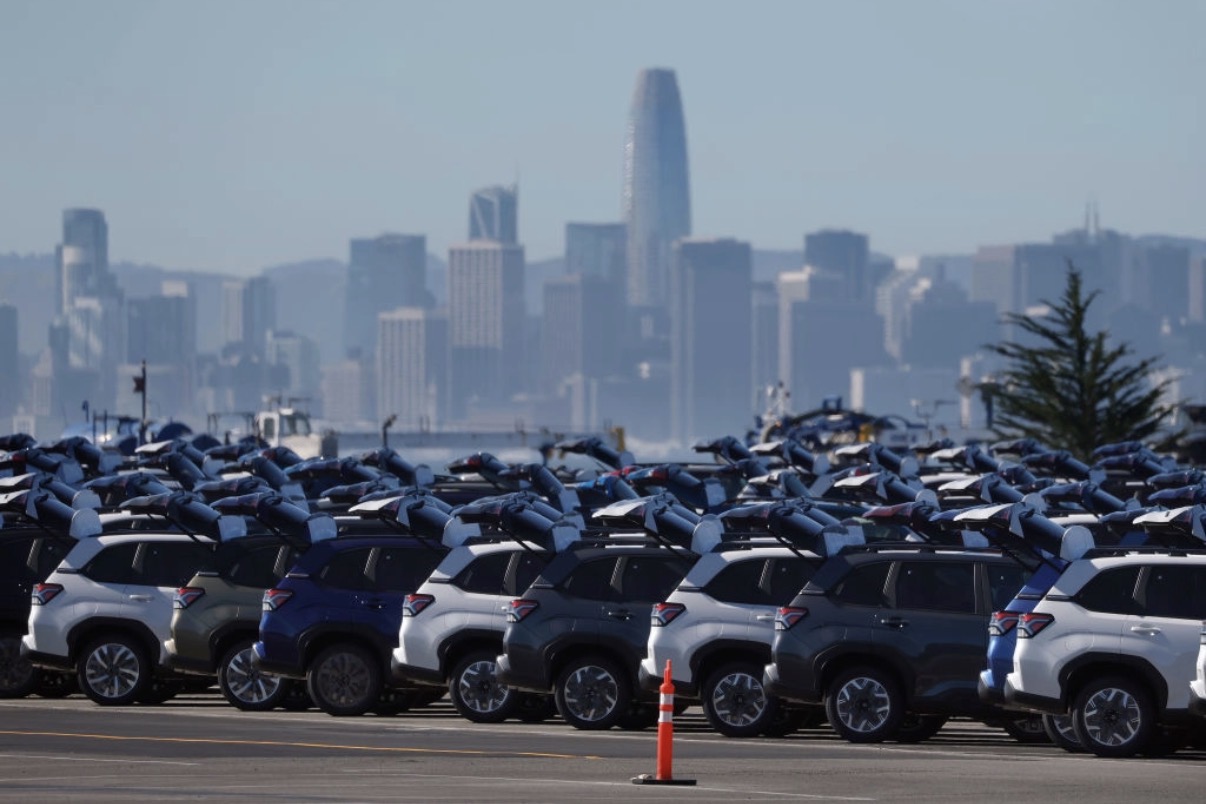
Few things symbolize the post-war American way of life better than the automobile and the freedom of the open road. And few things are better indicators of the financial health of the American household and economy as a whole than the industries which produce, sell and insure the cars and trucks Americans love to own and drive.
Multiple indicators in the automobile industry are flashing red warning lights. Whether looking at aggregate units sold, prices for new and used vehicles, average ownership periods, loan costs and the delinquencies thereupon, and even the cost of insurance, they convey a message of a strained American consumer impacted by inflation in the auto industry that has substantially outpaced the Consumer Price Index (CPI) as a whole.
While new vehicle sales have recovered from their COVID-era trough to roughly 16 million units annually, the figure is still short of the 17 million-plus pace that defined the pre-pandemic era. New auto sales figures distill big-ticket discretionary spending, debt capacity, employment income confidence, and credit access into one number. The U.S. auto market, taken in full, paints a picture of an American consumer stretched thin, barely holding on, and running out of room to maneuver.
The average new vehicle now costs around $49,000, compared with $35,000 in 2018. That’s a 40 percent increase in six years, driven first by pandemic-era chip and other shortages that gutted inventory and handed dealers pricing power they hadn’t seen in decades, and now by a market that has simply re-priced itself higher and stayed there. Inflation did what inflation does: it ratcheted up and didn’t come back down. Even with recent gains, real incomes have not kept pace.
Financing costs have made the equation worse. Auto loan rates, which averaged around 3 to 4 percent in 2021 when the Fed was still running its zero percent interest rate experiment, are now north of 6.5 percent for new vehicles and closer to 12 percent for used. The response has been predictable. Loan terms have stretched to nearly 69 months—almost six years—to keep monthly payments low and to spread the pain across time. Down payments have shrunk, and leases have grown in place of purchases. Negative equity, where the owner owes more on its vehicle than it is worth, has become endemic. Americans are not solving the affordability problem. They are deferring it.
The delinquency data confirms that deferral has limits. Auto loan delinquency rates have hit their highest level since the Global Financial Crisis. Nearly 4 percent of auto loan balances are at least 30 days past due, a figure that understates the problem since it excludes loans already charged off and written down. Among younger borrowers under 45, the delinquency rate exceeds 7 percent. Total auto loan debt now stands at $1.64 trillion, a larger figure than total student loan debt. Auto loans, once the least risky of consumer credit products, have quietly become one of the riskiest.
The problem isn’t limited to sticker prices and loan rates. The total cost of car ownership has been quietly compounding for years. Auto insurance premiums rose more than 50 percent between 2020 and 2024, the single most inflated major consumer spending category since the pandemic. Repair and service costs have risen by approximately 35 percent since 2020. Part of the challenge with modern vehicles is their technology. Cameras, sensors, and proprietary electronics can turn a minor fender bender into a several thousand-dollar repair and recalibration job. The auto owner’s transportation budget is being hit from every direction simultaneously.
Americans have responded rationally by keeping their vehicles longer than at any point in recorded automotive history. The average car on the road today is 12.2 years old. The average new car buyer holds onto a vehicle more than eight years before trading it in. The decision calculus has shifted from “when do I want a new car” to “when can I afford one.”
Passenger cars now comprise a minority of the new vehicle market, representing less than 17 percent of new vehicle sales. Light trucks and SUVs make up the vast majority at 83 percent. While some of this is consumer preference, automakers have for over a decade shifted their focus from entry-level sedans in pursuit of higher-margin trucks and crossovers. This shift has effectively eliminated the affordable “starter car” on ramp to new vehicle ownership.
Younger buyers feel this most acutely. Gen Z is entering the market at the worst time in a generation, paying record prices with entry-level wages and student debt in tow. Their auto loan delinquency rate exceeds 7 percent. Millennials, who should be in their peak earning and spending years, are leaning heavily on used vehicles and extended lease terms to manage cash flow. Both cohorts are financially exposed in ways their Boomer parents were not at the same age.
The headline sales volume figures are cited as evidence that the auto market, and by extension the consumer economy, is fine. It is not the right number to watch. Delinquency rates, average loan terms, ownership holding periods, and insurance renewal rates tell the real story.
Yes, American consumers are still buying cars. But they are doing so on worse terms, with thinner cushions, and fewer options than at any point in recent memory. The car is no longer just transportation or an asset. It has become a financial liability that millions of households can barely sustain. Like homeownership, automobiles have become a “tale of two cities,” with the wealthy riding the waves of higher prices that are drowning the working and middle classes.
The automobile market does not signal a healthy economy, but rather one on borrowed time. Over the same post-pandemic period, corporate profit margins have continued to expand, and shareholders have reaped the lion’s share of the benefit. The best solution would be to see a greater portion of these productivity gains translate into higher wages. This was Henry Ford’s prescription. He paid his workers well above industry standards so his employees could afford his cars. We need more of this thinking across corporate board rooms.