Last month, former U.S. President and 2024 presidential candidate Donald J. Trump laid out key pillars of his policy proposals in a speech at The Economic Club of New York. Given the audience, Trump focused more on economic and financial matters than he typically does in campaign speeches. One intriguing idea that Trump floated was the possibility of replacing or substantially reducing individual and corporate income taxes with tariffs on foreign imports. The question arises, would this be practicable? If so, to what extent?
From 1868 until 1913, 90 percent of all U.S. government revenue came from excise taxes on liquor, beer, wine and tobacco. Once prohibition became law under the eventually repealed eighteenth amendment, and as the size of the Federal government grew exponentially in later years, the government turned towards income taxes as the primary source of revenue. Today, the U.S. raises about $4.5 trillion in revenue a year. Of this amount, half comes from individual income taxes, and an additional 36 percent comes from Social Security and Medicare taxes. Corporations pay about 10 percent of total U.S. taxes. Customs duties make up $70 billion of tax revenue, a drop in the bucket. Excise taxes and customs duties each represent only two percent of total U.S. tax revenue.
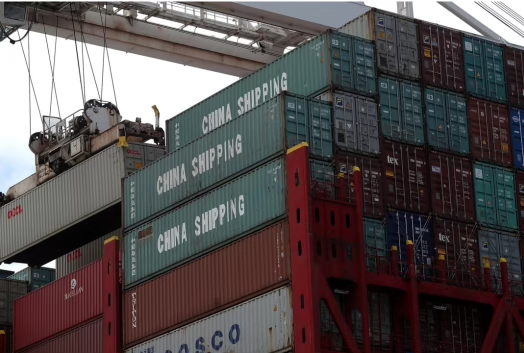
The U.S. imports about $3.1 trillion of goods from other countries. In order to completely replace personal income taxes, the U.S. would need to levy tariffs equivalent on average to 100 percent of all imported goods. This is neither realistic nor desirable. Our manufacturing base is not ready to replace many of these imported products. Nonetheless, tariffs may go a long way towards reducing the over $1 trillion annual deficit that the U.S. maintains on trade in good with the rest of the world, and provide the necessary stimulus and protection necessary to—over time—reinvigorate U.S. domestic manufacturing.
Over the past generation, the idea of free trade moved from being an aspirational principal to a dogmatic doctrine of U.S. foreign policy. Somewhere along the way, Free Trade Maximalists forgot that free trade presupposes fair trade. The academics and economists who modeled the benefits of free trade always assumed that trading nations are honest and deal fairly with one other. That has not proven to be the case in the harsh realities of global commerce. The U.S. has repeatedly been on the losing end of the bargain against its foreign competitors in the marketplace.
China, which represented nearly half of the then $900 billion U.S. trade deficit as recently as 2018, has proven to be a repeat offender when it comes to trade. China has been guilty of widespread currency manipulation, rampant corporate espionage and intellectual property theft, subsidizing national champions for export to U.S. markets, lending to these same companies at artificially low interest rates, and closing off the Chinese domestic market to U.S. companies.
In response, the Trump administration, under the guidance of U.S. Trade Representative Robert Lighthizer, imposed a series of increasingly stringent tariffs, in some cases up to 25 percent, on certain goods from China, targeting those products and industries where the abuses had been the worse. Despite political and policy differences on many other matters, the Biden administration left the vast majority of the Trump-era tariffs in place, and continued to follow the Trump administration’s tougher trade policies towards China. In some cases, such as electric vehicles (EVs), semiconductors, solar panels, and some medical equipment, tariffs have been further increased under the Biden administration to 50 percent (100 percent for EVs).
Then and now, the primary objection to tariffs has been retaliation. That is, the idea that there would be a tit-for-tat response from the target country that would hurt American interests. These fears have to date been unfounded. As it turns out, China’s economy depends heavily on the U.S. market. China needs the American consumer as much or more than we need them. Despite vociferous diplomatic protests, and some token retaliatory tariffs of their own, China essentially backed down and continued to profitably ship to the U.S. even with heightened tariffs. China realized that the game was up, and that they were going to have to deal with their most important trade partner on a more level playing field.
While the U.S. succeeded in reducing the trade deficit with China (which represented 26 percent of total trade deficit in 2023, down from 49 percent in 2018), it did so in part by shifting a substantial portion of its imports to Vietnam, another communist nation that, while not as hostile to U.S. interests as China, cannot be called a close ally or loyal partner of the U.S. Still, the total U.S. trade deficit has continued to grow, reaching $1.1 trillion in 2023.
Another common objection to tariffs is that they are inflationary. This is also somewhat of a red herring. The biggest driver of U.S. inflation since 2022 has been services like transportation, insurance, health care, and education, housing and shelter costs, along with food and energy. Services and housing are not readily imported. Prices for many product categories, which do reflect imported goods such as appliances, apparel, computers and other consumer items, have been deflationary even as overall price levels have steadily risen.
A key priority for any incoming administration should be to clarify the United States’s trade goals and align them to protect U.S. strategic interests. We don’t primarily need free trade, we need fair trade. Trade isn’t free if it isn’t fair. Tariffs should be primarily targeted at cheating countries. Tariffs are an effective tool against unfair trade practices when imposed judiciously and targeted at countries that refuse to play fair. If U.S. imports are being subsidized by the exporting country, either directly or through currency manipulation, countermeasures need to be imposed.
Secondly, we need balanced trade. Not with every trading partner, but on the whole. We need less imports and more domestic production. We need to develop our manufacturing capabilities in critical areas such as pharmaceuticals, semiconductors, defense equipment, and strategic minerals refining. The pandemic years made these weak links glaringly clear. Finally, the U.S. needs to leave the China-dominated World Trade Organization (WTO). It is the WTO’s systematic bias against the U.S. in trade disputes that did the U.S. in after 1995. Trade deficits blew up under the WTO regime, and they have only grown worse since.
While tariffs may not be able to replace your income taxes, they may go a long way to rebalancing the trade needed to strengthen the American economy, and help to rebuild Americans’ wealth along the way.