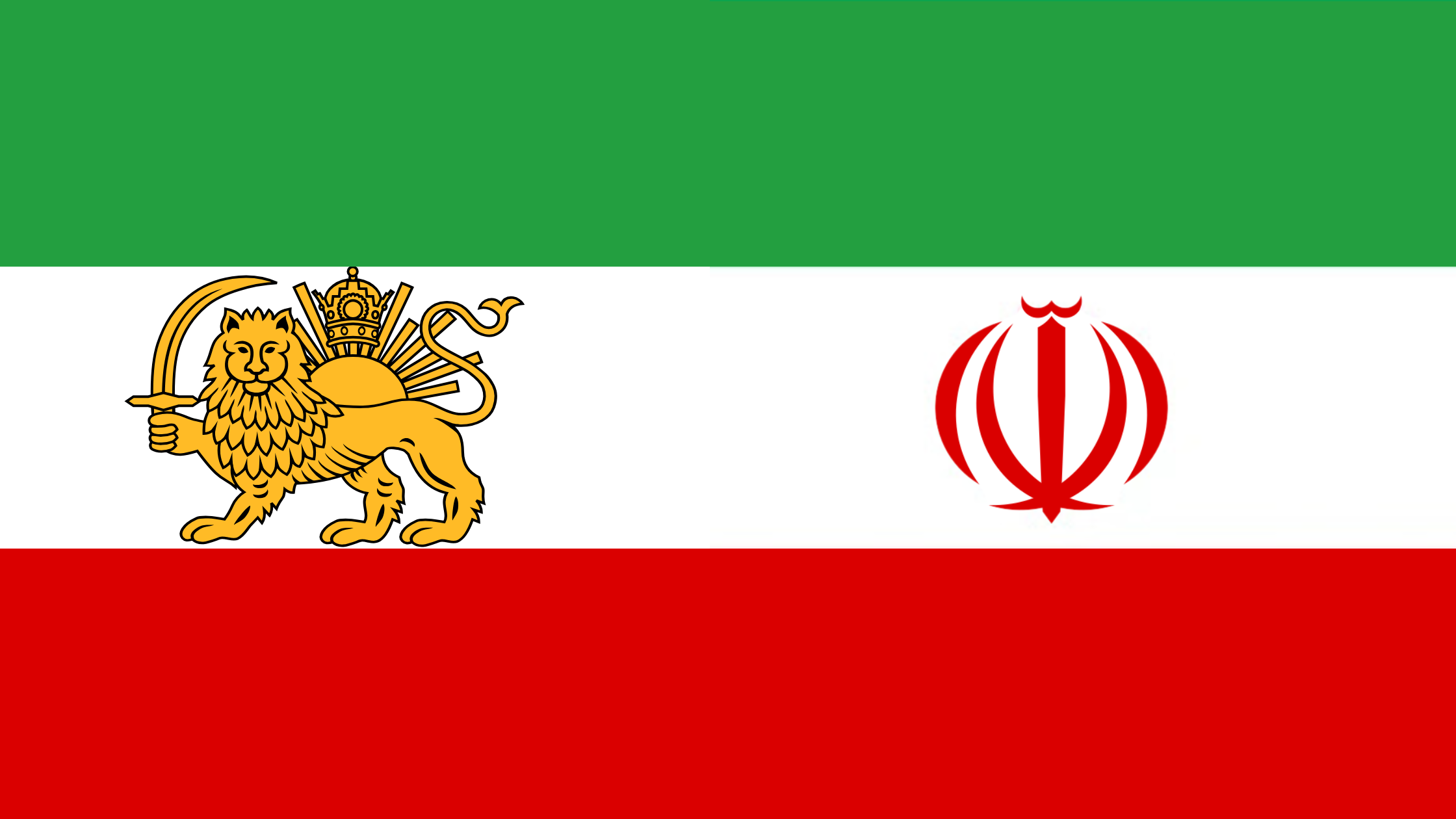
For over 45 years, the people of Iran have been under the oppressive boot of the radical Islamic clerics who took over the country in 1979. The Supreme Leader, Ayatollah Ali Khamenei, in power since the death of the Ayatollah Khomeini in 1989, has continued his predecessor’s hardline Islamicist ideology and rule. Iran’s official government policy is one and the same with its Shi’a theology, which demands the annihilation of the Jewish state of Israel (and the Jews with it). There is no point of negotiation or discussion here, no middle ground to be found. Therefore, since the Islamic Republic is their forever enemy, Israel must exist in a perpetual state of war and terror for its own survival.
There is therefore no legitimate reason to allow the Iranian radicals to have nuclear warfaring capability. But it is not just Israel and the U.S. that agree on this. None of Iran’s key regional (and Muslim) neighbors, not Saudi Arabia, not Pakistan, not Egypt, not Turkey, not the UAE, think that a nuclear-armed Iran is a good idea. In an already unstable Middle East region, such a development would dangerously shift the balance of power and result in a regional arms race of mutually-assured destruction.
Many people in Iran resent their tyrannical leadership, while at the same time proudly continue to resist 45 years of U.S.-led economic sanctions and diplomatic isolation. These are not incompatible ideas. The Iranians are a noble and ancient people, accustomed to suffering and to resisting foreign interference. Once a great empire themselves, they recognize imperial overreach when they see it, whether Russian, Chinese, or U.S. in origin.
While the Iranian people have many divergent views, dissenting voices are not tolerated and dissidents aggressively silenced. In fundamentalist Islam, there is no division between spiritual and temporal authority, no separation of what we’d call Church and State. There is no rendering unto Ceasar what is Ceasar’s and unto God what is God’s, as Jesus wisely advised his followers in how to respond to temporal political powers. In Islam, the two interests are one. Islam requires complete submission, and inequality is the rule not the exception, whether between men and women or between the faithful Muslim and the infidel.
In the U.S., where little of this is appreciated, members of the so-called “Neo-Con” faction in Washington have long advocated for forceful regime change in Iran (just as they do for Russia). They suggest that the U.S. should simply take out Khamenei and his key leadership, establishing some sort of protectorate until a new, presumably secular, government can be established. The U.S. has a dismal track record from its many attempts to impose regime change on other nations. From Congo, Guatemala, and Vietnam in the Cold War, to Afghanistan, Iraq, and Libya in recent years, these benighted efforts have resulted in failed states and the creation of launch pads for regional instability and fanaticism. There is no reason to believe that direct U.S. intervention in Iran would be any more successful, and innumerable reasons why it would not.
The Republican Party is divided between this NeoCon group and President Trump’s core “MAGA” base, which wants Trump to honor his election commitment to end U.S. involvement in Ukraine and foreign wars generally, not start a new one. Therefore, President Trump has articulated a more narrow set of ambitions, i.e., the elimination of Iran’s nuclear warfare capability, not U.S.-directed regime change.
Without doubt, there must be regime change in Iran, not just for the sake of Israel’s survival, but for the benefit of over ninety million Iranians, many of whom would love to live their own lives in peace, not in an apocalyptic confrontation with the U.S. and the West. Yet the U.S. must continue to resist the temptation to seek to impose this regime change from the outside. The administration should nonetheless take care lest it effectively perpetuate the regime’s power. This is a difficult balancing act.
The Islamic Republic survived—for now—the military confrontation, but, like the proverbial statue of a king made of gold yet with clay feet, its base is fragile. The Revolutionary Guard remains powerful, and is fully invested (economically and politically) in its own continued rule. But these forces are not invincible. The Iranian regime is more isolated than ever, and its people increasingly frustrated and despairing.
The Iranian people should freely choose the future they want to inhabit. The U.S. should do all it can to support an indigenous movement to establish a new government, ideally through a representative and democratic process, short of direct intervention. The large and wealthy Iranian diaspora stands ready and able to support such a transition. The Iranian people rightly fear a protracted and bloody civil war. This is certainly a great risk, but it is not the inevitable outcome. One can only pray that this is not just wishful thinking.