Investors have been rightly impressed by gold’s remarkable run, which in dollar terms has doubled in price over the past year. This performance vastly outpaces the stock markets (which are also sitting at all-time highs) and Bitcoin (trading sideways for months), the cryptocurrency challenger touted as a “digital gold” safe-haven alternative to depreciating fiat currencies such as the U.S. dollar.
The gold euphoria should be tempered by an uncomfortable recognition. Gold’s meteoric performance is a troubling sign that something is profoundly wrong—or at least brewing—in the global geopolitical, economic, and monetary environment.
Investors are reaching for safety at the same time that risky investments continue to rise in dollar-terms value. Central banks are accumulating and hoarding gold, and reducing their U.S. dollar reserves, as all the while they prepare for economic, technologic, and kinetic war. Gold is a safe haven for individual investors so long as they can legally hold, buy and sell it. Most of us take that as a given.
But Americans should never forget that the U.S. government, under then President Franklin Delano Roosevelt’s Executive Order 6102 (April 1933), moved with coercive force (including massive fines and threat of up to ten-years’ imprisonment) to confiscate the estimated $1.5 billion in gold coins, bullion, and certificates held by ordinary Americans. This represented about five percent of the money supply, equivalent to about $1.1 trillion in liquidity terms in today’s financial system.
Then, in the midst of the Great Depression and related banking crisis, the U.S. dollar was convertible into gold at an artificially low fixed rate of $20.67 per ounce. Anyone could walk into their bank and demand their paper currency be redeemed for gold. Because of the loss of confidence in the banking system, that is exactly what they were doing, as were foreign governments and banks that had a claim on gold held in the U.S., draining the U.S. government and banks of their reserves.
Because the dollar was 100% backed by gold, and with the fixed conversion rate, the Federal Reserve couldn’t increase the money supply to help ease the credit crisis and stop the deflationary spiral the country was facing … because it didn’t hold the gold.
So, FDR simply declared a national emergency, confiscated citizens’ gold for twenty bucks, and then, the next year, “presto” simply changed the official conversion rate upward by 67% to $35 per ounce, enabling money supply expansion, reducing the value of the dollar in foreign currency terms, and thus supporting U.S. exports.
This was done in the context of rising geopolitical tensions, tariff wars, rumors of rearmament in Europe, competitive currency devaluations, and a scramble by governments around the world to shore up their gold reserves. Sound familiar?
Today, we are in a similar—but also very different—geopolitical environment. What is analogous is that the nations of the world are transitioning into a “war economy.” The central banks are once again buying as much gold as they can get their hands on. Protectionism and resource nationalism are the orders of the day. Fiat currencies are on a path towards debasement, an environment in which governments deprive their citizens of purchasing power and use inflation as stealth taxation.
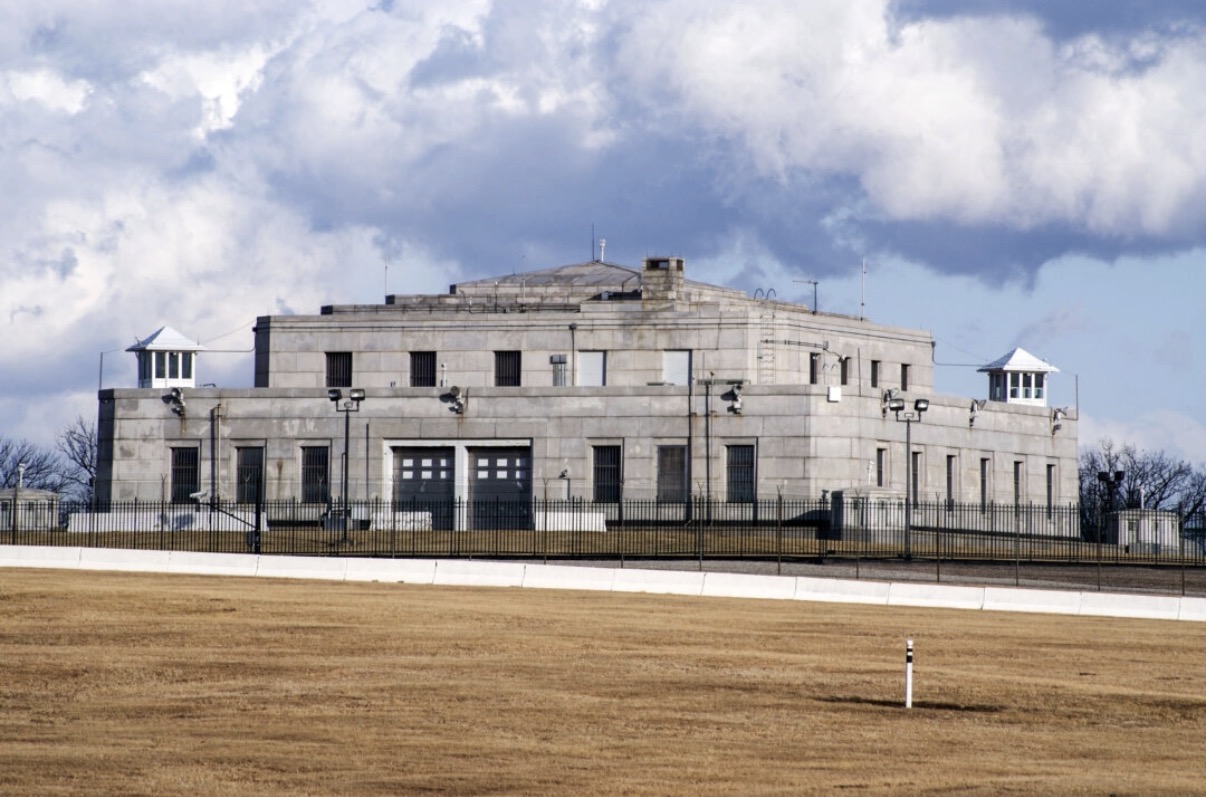
The U.S. government is reportedly the world’s largest holder of gold at over eight thousand tons. Yet President Trump has quietly backed away from calls to physically audit the official gold reserve in Fort Knox to confirm it is still there (the last full audit was done in 1953). This remains a troubling aspect for those looking for assurance about the U.S. fiscal position, otherwise growing worse by the day with persistent deficits, rising national debt, and the specter of another round of inflation just outside the door.
I’m not suggesting that the U.S. government is considering gold confiscation. I’m reminding all of us that “Black Swan” events happen unexpectedly and suddenly. A kinetic intervention into Iran would potentially be one such event, with economic and financial ramifications likely much greater than the restrained response to U.S. action in Venezuela. When a Black Swan lands, the shockwaves move in patterns difficult to anticipate. In perceived national emergencies, governments reach into their bag of tricks for unprecedented solutions. This was true in 1914 (the onset of the cataclysm of World War I), in the 1930s Great Depression, in 1971 when President Nixon “temporarily” suspended dollar convertibility into gold by foreign banks and governments to stem the outward flow of reserves (temporarily has lasted 55 years), and in 2008’s Global Financial Crisis. The long list of government interventions during this period resulted in distortions to the monetary and financial markets—and the real economy—that ripple to this day.
We are in times that are not business as usual. I continue to view gold as an important part of a financial umbrella. Over millennia, gold has proven to be real money when fiat (paper) currencies inevitably fail. But I keep one eye open to the possibility that in a national emergency, all bets are off. History shows that no action is beyond the consideration of governments attempting to extricate themselves from an apparently intractable strategic dilemma.