The assassination of Charlie Kirk on September 10, 2025 was not merely a political or personal tragedy. It was an assault on the very idea that young Americans could still be reached through reason, evidence, and constructive dialogue in the search for truth. Kirk built Turning Point on the conviction that discourse could awaken a generation often written off as checked out and numbed by screens, debt, and cultural decay. His killer—and those who later cheered the murder—sought to silence that voice forever. Instead, the shot echoed, and something unexpected is rising from the reverberation.
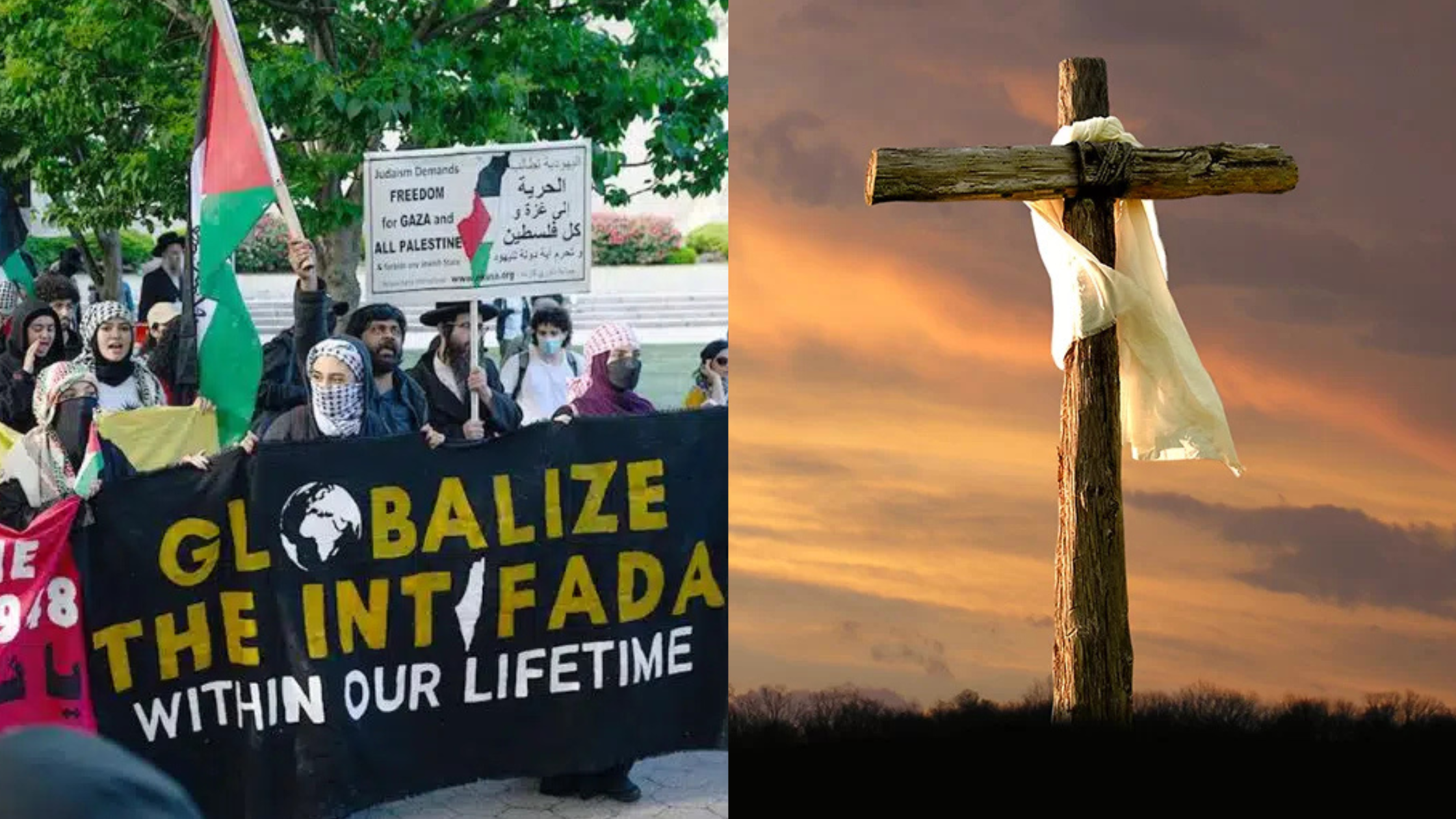
Contrary to the tired stereotype of Gen Z (roughly, those born between 1997 and 2012) as passive and apathetic, this cohort is showing intense, if sharply split, forms of engagement. One path dominates elite campuses and their online amplifiers: furious, sometimes destructive protests over Israel and Palestine, frequently laced with antisemitic rhetoric, and couched in the vocabulary of identity politics. The other path emerges in quieter settings—family homes, local churches, and online faith communities, as well as more visible “tent revival”-styled evangelism events,—where young people, especially men, are rediscovering Christian commitment, traditional morality, and solidarity with Israel rooted in biblical conviction.
This bifurcation is real and growing. It reflects not indifference, but a profound search for meaning and community-based connection in a world that offers few anchors to this generation adrift. The question is whether these two currents will collide in open strife or whether one will ultimately prevail to define America’s future.
The campus radicalism is hard to miss. Since the horrific Hamas attacks of October 7, 2023, Ivy League quads and similar environments have hosted encampments, building takeovers, and chants that cross dangerously into calls for violence against Jews. “From the river to the sea” and “globalize the intifada” are not fringe slogans; these and other Islamist calls to war and violence against Jews have become normalized in activist circles, incongruently including among trans and gay activists. Polling captures the shift: Harvard-Harris surveys from 2025 repeatedly show that around 60 percent of 18- to 24-year-olds express greater support for Hamas than for Israel in the conflict—a reversal that would have been unthinkable a generation ago. Pew Research Center data from the same period reveals unfavorable views of Israel climbing sharply among the young, with under-30s more likely to sympathize with Palestinians and to question U.S. support of Israel. Antisemitic attitudes—beliefs in excessive Jewish influence or dual loyalties—appear more prevalent in this age group, per Anti-Defamation League tracking and campus incident reports.
This energy draws from a familiar historical playbook: the student uprisings of the late 1960s, when privileged youth romanticized distant causes while scorning their own society’s foundations. Vietnam has been replaced with Gaza; anti-imperialism has been swapped for anti-Zionism; and civil rights for blacks has morphed into trans privilege that requires the silencing of traditional worldviews on gender and sexuality. Social media accelerates the process, feeding raw images and selective narratives that bypass context. The result is a worldview that casts Jews and Israel as eternal oppressors in an intersectional hierarchy, excusing or even celebrating aggression against them. It is moral theater dressed as justice, but its fruits are division, intimidation, and—in extreme cases—violence against dissenters.
Across much of the rest of the country, however, a different response is emerging. In the aftermath of Kirk’s death, reports from pastors and researchers point to renewed interest in faith among those in their late teens and twenties. Barna Group’s 2025 findings are striking: Gen Z now averages nearly two church weekends per month in some metrics, surpassing older generations in certain measures of regular attendance and personal commitment to Christ. Young men in particular show meaningful gains—drawn to structures of discipline, purpose, and clear moral authority amidst widespread confusion over identity and roles. Bible engagement spikes on platforms like TikTok, and pockets of revival echo earlier spontaneous movements, such as the Asbury outpouring.
This turning is not (yet) a full-scale national revival on the order of the First or Second Great Awakenings, which reshaped American society through mass conversions and cultural upheaval, fueling the war for American Independence and the Abolitionist movement, respectively. Those historic waves also began small, among the restless young, and spread through preaching, personal encounter, and societal crisis. Today’s version remains more localized—strongest outside elite bubbles, among non-college youth, cultural conservatives, and those disillusioned by empty secular promises. Yet it carries similar DNA: a rejection of hollow autonomy in favor of transcendent truth, a hunger for family and community, and a biblical lens that views support for Israel as part of God’s enduring promises rather than geopolitical expediency.
The contrast could not be starker. One side operates from a framework of identity politics, power dynamics and grievance theory, tearing at institutions and alliances. The other builds from covenant and creation, seeking to restore what has been lost. Class, geography, and education sharpen the divide: progressive activism clusters in credentialed, coastal, urban spaces; the faith resurgence flourishes in heartland and working-class circles. Israel has become a litmus test—vilified as colonial in one camp, defended as covenantally significant in the other.
Are these paths destined for conflict? Human nature and recent history suggest yes. When fundamental visions of good and evil clash without shared language for debate, escalation follows. We have already seen discourse give way to disruption on campuses and, tragically, to lethal force at Utah Valley University and in numerous recent school shootings perpetrated by trans gunmen. The radical fringe demonizes traditional believers as threats; the faithful increasingly see unchecked progressivism as a cultural death spiral. Without renewed commitment to civil exchange—the very thing Charlie Kirk championed—the fracture widens.
Yet despair is not the Christian response, nor the American one. Martyrs’ blood has historically watered the ground for renewal. Kirk’s life and death remind us that ideas worth defending attract both followers and foes. Millions of young Americans, watching the emptiness of rage on one side and the quiet strength of faith on the other, face a clear choice. They can join the “deconstructors” who would dismantle the Judeo-Christian inheritance that built this nation, or they can reclaim it—building families, churches, and a society ordered toward truth and liberty.
The hour demands resolve. Gen Z is not lost; it is being sifted. Let the elite echo chambers rage toward irrelevance. Let the faithful rise in humility and courage. In that rising lies the hope of an American renewal—one generation choosing life over destruction, light over the gathering dark.